
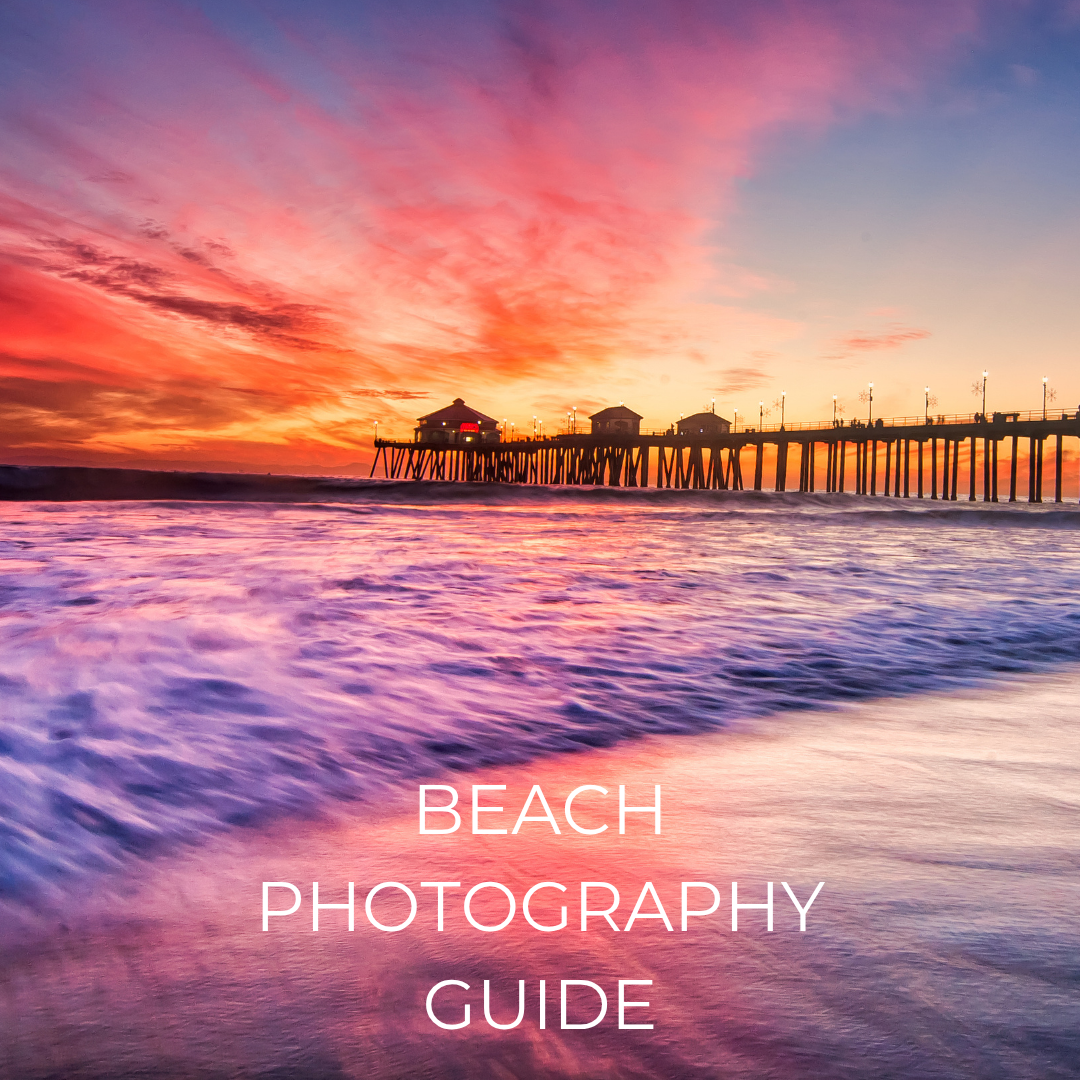
Beach Photography Guide
Complete guide to stunning beach and coastal photography
Master the art of capturing beautiful beach scenes, from sunrise to sunset
Essential Camera Settings
Bright Sunny Conditions
Golden Hour
Action Shots
Essential Equipment
Must-Have Gear
Reduces glare and contrast
Protects lens from salt spray
Prevents lens flare
Keep lens clean
Recommended Lenses
Expansive seascapes
Versatile beach scenes
Wildlife and distant subjects
Perfect for beach portraits
Composition Techniques
Rule of Thirds
Place the horizon on the upper or lower third line, not in the center. This creates more dynamic and interesting compositions.
- • lower third: emphasizes dramatic skies
- • upper third: highlights foreground details
Leading Lines
Use natural beach elements to guide the viewer’s eye through your composition.
- • wave patterns and foam lines
- • shoreline curves and driftwood
- • footprints in the sand
Best Times to Shoot
Golden Hour
1 hour after sunrise
1 hour before sunset
warm, soft light perfect for portraits and landscapes
Blue Hour
30 min after sunset
30 min before sunrise
even lighting, rich blue skies, perfect for long exposures
Overcast Days
any time during
cloudy conditions
soft, even lighting ideal for close-ups and details
Common Challenges & Solutions
Harsh Sunlight & Shadows
Problem: overexposed highlights and deep shadows
Solution: use graduated ND filters, shoot in RAW, or bracket exposures for HDR
Salt Spray & Sand
Problem: damage to camera equipment
Solution: use UV filters, keep gear in sealed bags, clean immediately after shooting
White Balance Issues
Problem: blue-tinted or overly warm photos
Solution: use custom white balance or shoot in RAW for post-processing flexibility
Moving Waves
Problem: blurry water or frozen motion
Solution: 1/500s+ to freeze action, 1/4s-2s for smooth water effect
Creative Techniques
Long Exposure Water
- • use 1-4 second exposures for silky water
- • ND filters help achieve longer exposures in daylight
- • tripod essential for sharp results
Silhouette Photography
- • shoot during golden hour or blue hour
- • expose for the bright background
- • keep subjects simple and recognizable
Safety & Etiquette
Safety First
- • always be aware of tide times and conditions
- • never turn your back on the ocean
- • watch for rogue waves and strong currents
- • use reef-safe sunscreen to protect marine life
Beach Etiquette
- • respect wildlife and nesting areas
- • leave no trace – pack out all trash
- • ask permission before photographing people
- • don’t disturb natural formations for photos