
Planning a trip to Rome and wondering how to get around? The Eternal City is a maze of ancient streets, bustling piazzas, and modern chaos and figuring out transportation can feel overwhelming. This ultimate Rome transportation guide covers everything you need to know: walking, metro, buses, taxis, ride-sharing, scooters, trains, and even driving. Whether it’s your first visit or your fifth, here’s the best way to get around Rome without the stress.
Walking in Rome: The Best Way to Explore
When it comes to how to get around Rome, the answer often starts with your own two feet. Walking is hands down the best way to soak in the city’s charm. Many landmarks, the Colosseum, Trevi Fountain, Pantheon, Piazza Navona, and Spanish Steps are within easy walking distance of one another.
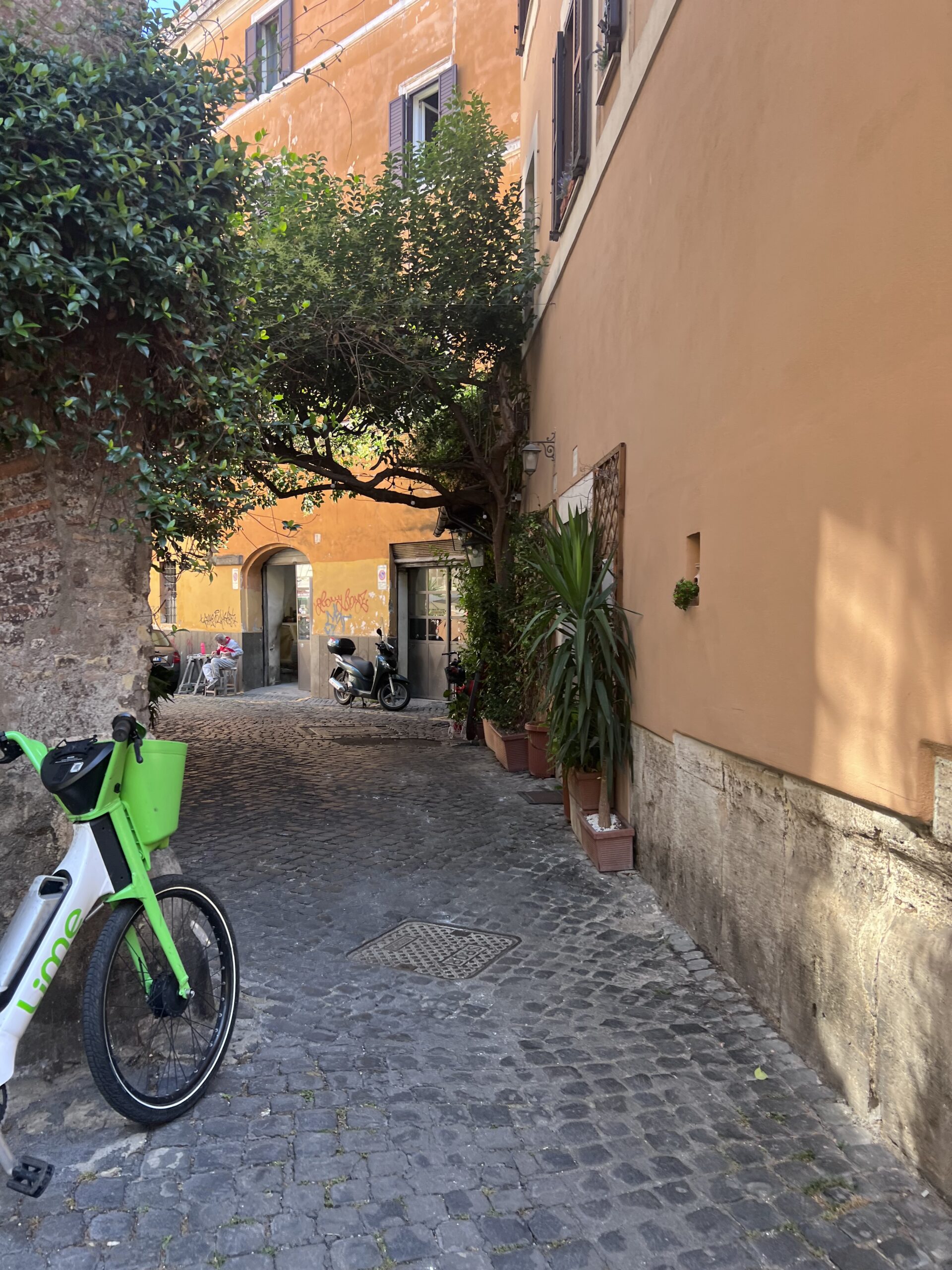
✅ Tip: Wear sturdy shoes. Rome’s cobblestones (sampietrini) are gorgeous but tough on your feet. On my last trip I walked 30,000 steps each day, I definitely felt it.
Rome Public Transport: Metro, Buses & Trams
Rome’s public transport system isn’t perfect, but it’s affordable and gets you where walking can’t.
Metro in Rome
The Rome Metro has three lines:
- Line A (orange): Vatican, Spanish Steps, and Termini.
- Line B (blue): Colosseum, Circus Maximus, EUR district.
- Line C (green): Expanding line, mostly suburban.
The metro is the fastest option when crossing longer distances.
Rome Buses & Trams
Buses cover the whole city, especially areas without metro stations. Trams are fewer but scenic, especially tram #8 to Trastevere.
✅ Rome public transport tip: Always validate your ticket. Controllers do spot checks, and fines are steep.
Tickets & Passes
- Single ticket (BIT): €1.50, valid 100 minutes.
- Day passes: Roma 24H, 48H, 72H.
- Weekly pass (CIS): Great value for longer stays.
Tickets cover metro, buses, and trams and one ticket works for all.
Taxis in Rome & Ride-Sharing Apps
Taxis in Rome
Official taxis are white with a taxi sign and city crest. You’ll find them at taxi ranks or via apps.
- Base fare: €3–4 (more at night/Sundays).
- Fixed airport fares: €50 from Fiumicino, €31 from Ciampino to central Rome.
🚫 Avoid “taxi hustlers” near tourist sites — they often overcharge.
Ride-Sharing in Rome
Uber is available but only as Uber Black (luxury cars, higher fares). For standard taxis, locals prefer Free Now or IT Taxi apps.
Scooters, Bikes & E-Scooters in Rome
Want a fun, flexible way to get around Rome? Try e-scooters or shared bikes. Companies like Lime, Dott, and Helbiz make it easy to rent through an app. Perfect for short distances and scenic rides along the Tiber River.
✅ Tip: Avoid cobblestone-heavy areas and chaotic traffic zones.
Trains in Rome: Day Trips & Beyond
Rome is a gateway to the rest of Italy, and its trains are efficient and affordable. I took the train to Naples and loved the experience. The views of the countryside were magic.
- Termini Station: Main hub for high speed trains to Florence, Naples, Venice, Milan.
- Tiburtina & Ostiense: Secondary hubs, less crowded.
For Rome day trips (like Tivoli, Orvieto, or Frascati), regional trains are your best bet.
Driving in Rome: Should You Rent a Car?
Here’s the truth: renting a car in Rome is not recommended. Between chaotic traffic, limited parking, and restricted driving zones (ZTL – Zona Traffico Limitato), driving in Rome is stressful. Save the rental car for countryside or Amalfi Coast trips.
Quick Rome Transportation Tips
- Validate tickets every time to avoid fines.
- Plan buffer time as buses can be delayed.
- Stay alert in crowded areas (pickpockets target tourists).
- Mix walking & transport and walk where sights are clustered, metro for longer trips.
What’s the Best Way to Get Around Rome?
The best way to get around Rome is a mix of walking and public transport. Wander through historic neighbourhoods on foot, then use the metro or buses for longer distances. For late nights or convenience, taxis and apps fill the gap. With this guide, you’ll navigate Rome like a pro and maybe even enjoy getting a little lost along the way.