Kyoto is one of the most rewarding cities in the world to travel solo — serene, immaculate, and astonishingly safe, yet endlessly rich at street level. For more than a thousand years it was the capital of Japan, and that history is everywhere: in the temples and shrines, the wooden machiya houses, the geisha districts, and the tea houses that still keep the old rhythms. This guide covers when to visit, where to stay, what to eat and drink, and the experiences worth making time for — written from personal visits.
Kyoto rewards the traveller who slows down. With over a thousand temples and shrines, it's tempting to rush — but the city is best taken gently, one quiet garden and one long lunch at a time.
It is a place built around neighbourhoods, each with its own mood: the lantern-lit lanes of Gion, the riverside cafés of Pontocho, the philosopher's paths of the eastern hills.
It is also a city that respects solitude. Eating alone is normal here; the streets are calm and safe after dark; and there is a deep, quiet beauty to wandering Kyoto by yourself.
Destination Guide
When to Visit
Kyoto is beautiful all year, but spring and autumn are the most loved — and the most popular.
Spring (Mar–May)
Cherry blossom season. The Philosopher's Path and temple gardens turn soft pink — the city at its most photogenic, so book well ahead.
Summer (Jun–Aug)
Hot and humid, but alive with festivals — the Gion Matsuri in July is one of Japan's greatest. June brings the rainy season, when the moss gardens glow.
Autumn (Sep–Nov)
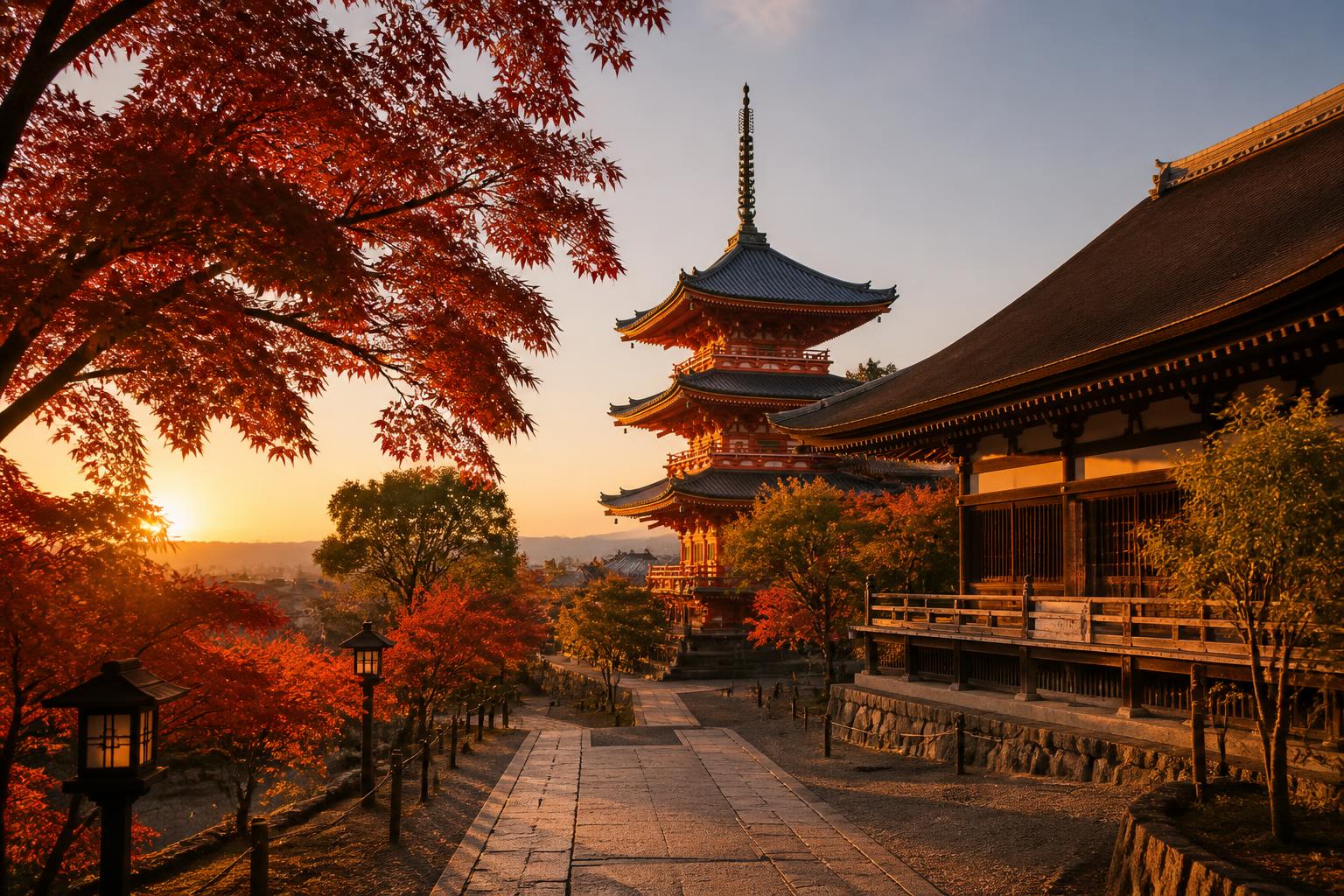
Fiery maple leaves across the temples and hills. Arguably the loveliest time to visit — crisp days and golden light.
Winter (Dec–Feb)
Cold, clear, and quiet. Fewer crowds, dusted snow on temple roofs, and the city at its most contemplative.
- Cherry blossom (late March–early April)
- Autumn foliage (mid–late November)
- Gion Matsuri (July)
Destination Guide
Getting There & Around
Kyoto has no major airport of its own — most travellers arrive by Shinkansen, or fly into Osaka's Kansai Airport (KIX) and take the train in.
Once you're here, the city is wonderfully easy to navigate:
- The Shinkansen reaches Kyoto Station from Tokyo in around two hours
- An IC card (ICOCA, Suica, PASMO) taps you on and off buses and subway
- City buses reach most temples; two subway lines cross the centre
- Much of central Kyoto is flat and lovely to explore by bicycle or on foot
Destination Guide
Where to Stay
Your base shapes the rhythm of your days — Kyoto's districts each offer a different version of the city.
Gion & Higashiyama
For old Kyoto — lantern-lit lanes, temples on your doorstep, and atmospheric evenings.
Downtown (Kawaramachi / Pontocho)
For dining, riverside walks, and the most central, lively base.
Kyoto Station area
For convenience and transport links in every direction — ideal for day trips.
Arashiyama
For a quieter, more scenic stay among bamboo, river, and mountain temples.
Destination Guide
Top Experiences
Kyoto gives you moments that feel like nowhere else on earth.
- The thousands of vermilion torii gates at Fushimi Inari, early and quiet
- Kiyomizu-dera at sunset, looking out over the city
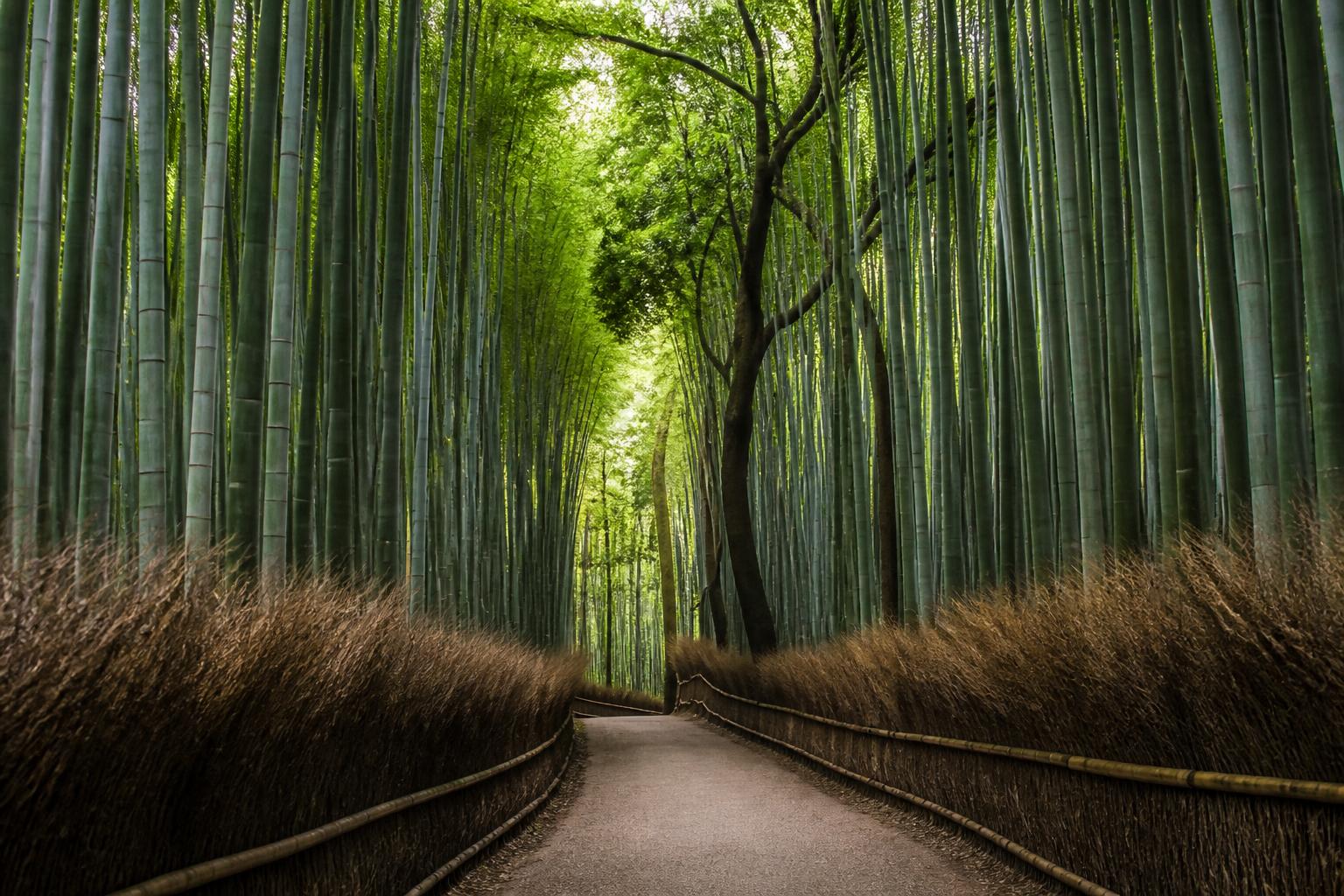
- A slow walk through the Arashiyama bamboo grove at dawn
- Matcha and wagashi in a traditional tea house
- An evening stroll through Gion as the lanterns come on
- The golden pavilion of Kinkaku-ji mirrored in its pond
Destination Guide
Food & Drink
Kyoto's food is refined, seasonal, and deeply tied to its temples and tea culture — and the city is wonderfully easy to enjoy alone.
Mornings can be as simple as a quiet bowl at a soba stand or a tofu breakfast near the temples.
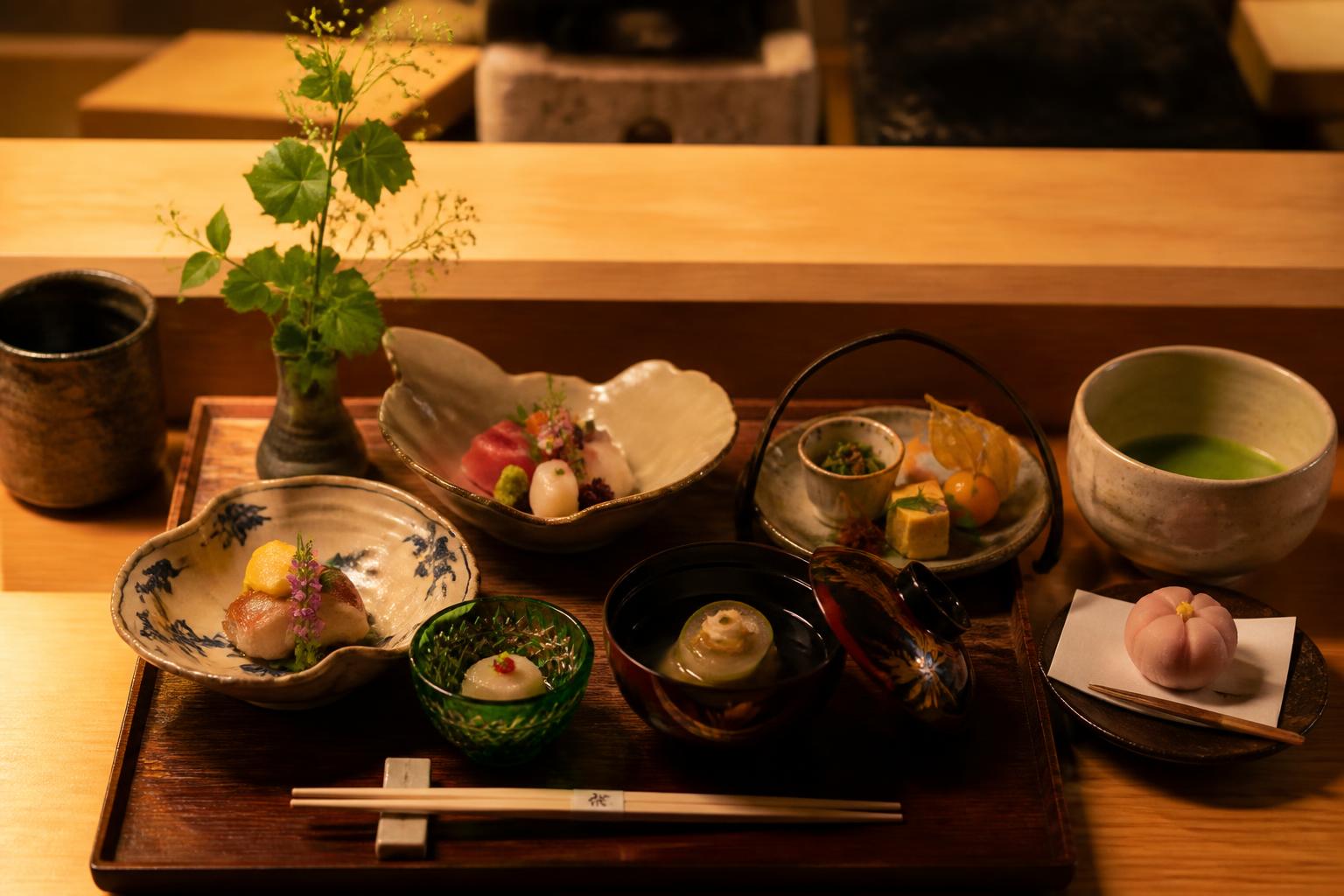
Lunch is where Kyoto shines for solo travellers — a counter set meal, a bowl of udon, or kaiseki's smaller cousin, the obanzai home-style spread.
Evenings drift into Pontocho's riverside restaurants, tiny izakayas, and tea houses serving sweets and matcha.
A few things to seek out —
- Kaiseki — Kyoto's seasonal, multi-course high art
- Yudofu (hot tofu) near the temples of Nanzen-ji
- Obanzai, Kyoto's elegant home-style cooking
- Matcha and wagashi in a quiet tea house
- Nishiki Market for snacks, pickles, and sweets
Destination Guide
Neighbourhoods
Each district of Kyoto is almost a world in itself.
Gion
The famous geisha district — wooden tea houses, lantern-lit lanes, and old Kyoto atmosphere.
Higashiyama
The eastern hills — stone streets, temples, and the lovely Philosopher's Path.
Pontocho & Kawaramachi
The downtown heart — riverside dining, narrow alleys, and nightlife.
Arashiyama
Bamboo groves, river boats, and mountain temples on the western edge.
Destination Guide
Shopping
Shopping in Kyoto leans toward the beautiful and the traditional — easy to weave into a day of wandering.
- Ceramics, fans, and lacquerware from old craft shops
- Matcha, sencha, and tea ware to take home
- Wagashi (seasonal sweets) and pickles from Nishiki Market
- Incense, washi paper, and textiles from family-run makers
Destination Guide
Sample Itinerary
One Day
Fushimi Inari early, Kiyomizu-dera and the Higashiyama streets, then an evening wander through Gion.
Three Days
Add Arashiyama's bamboo and temples, the golden Kinkaku-ji, the Philosopher's Path, and a tea-house afternoon.
Five Days
Step beyond the city — a day trip to Nara's deer and great Buddha, plus time to find your own quiet corners.
Destination Guide
Day Trips
Some of Kyoto's best days happen just outside the city:
- Nara — ancient temples, a giant bronze Buddha, and free-roaming deer
- Osaka — food, energy, and a lively contrast, 15 minutes by train
- Uji — green tea country and the beautiful Byodo-in temple
- Arashiyama & the Sagano hills — bamboo, river boats, and monkey park
Destination Guide
Travel Tips
A few small things that make Kyoto easier:
- Visit the most famous temples at opening or near closing to beat crowds
- Carry some cash — many small shops and tea houses are cash-only
- Be respectful in Gion — don't chase or photograph geiko and maiko
- An IC card covers buses and subway; tipping isn't expected anywhere
Destination Guide
Getting Around
Buses reach almost every temple, and two subway lines cross the centre — but Kyoto's real pleasure is walking. The eastern hills, the riverside, and the old streets of Gion all reveal themselves best on foot.
Destination Guide
Signature Moments
These are the moments Kyoto quietly gives you.
The hush of a moss garden in the early morning.
The endless tunnel of vermilion gates climbing the hillside.
A bowl of matcha taken slowly in a wooden tea house.
Lanterns flickering on as you wander Gion at dusk.
It simply lets you in — quietly, gracefully — one temple, one tea, one street at a time.