The Heartland
Best Wineries in Chianti Classico
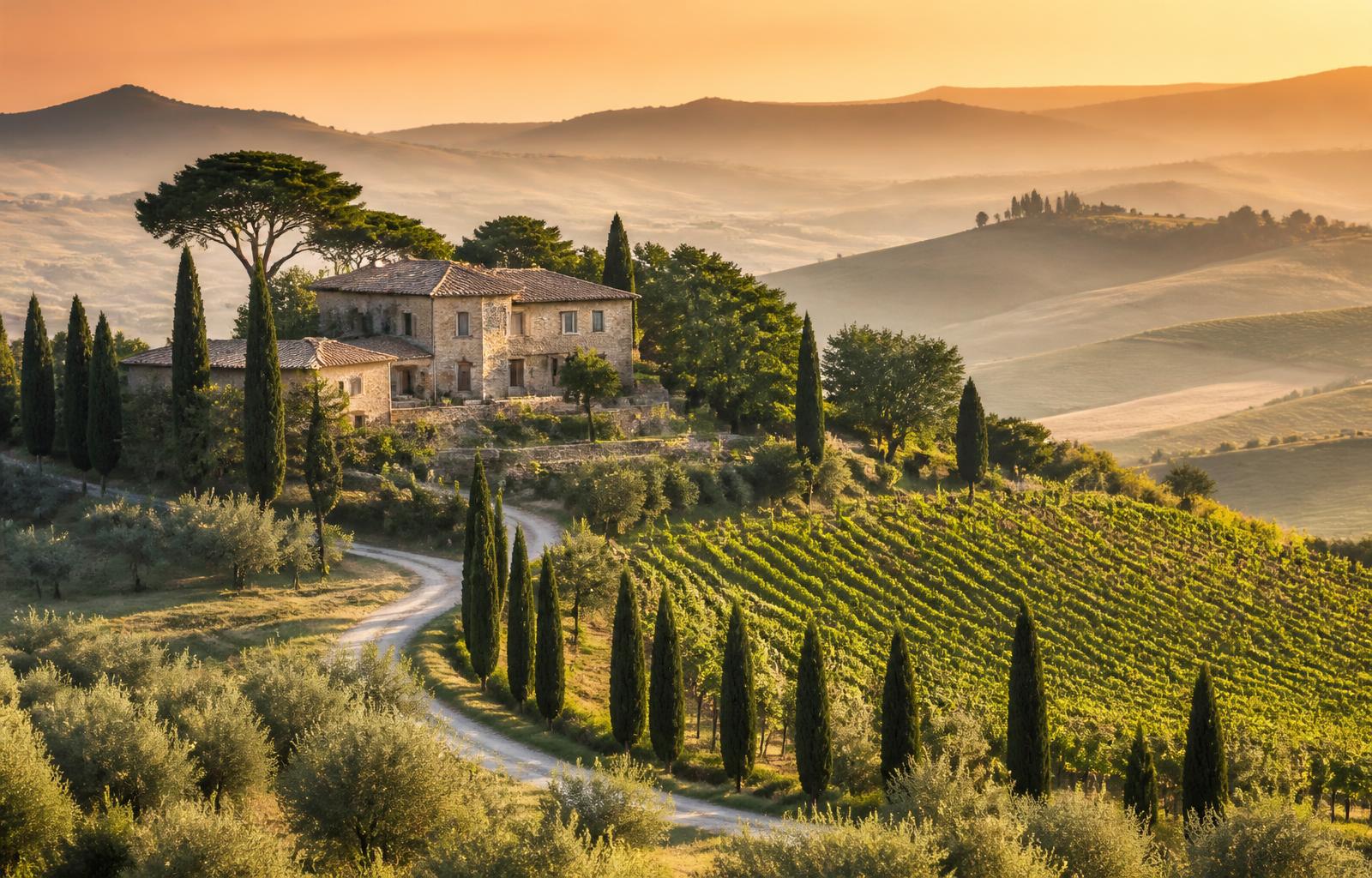
Chianti Classico is the historic core of Tuscan wine — the original zone designated in 1716, marked by the Gallo Nero (Black Rooster) seal. It sits between Florence and Siena along the Chiantigiana (SR222), and its estates range from medieval castles to invisible modern cellars built into the hillside. This is the easiest region to base a first Tuscan wine trip around.
A restored hamlet near Gaiole that produces some of the most highly rated Chianti Classico in the world — and doubles as an extraordinary contemporary art park, with site-specific works woven through the cellars and vineyards. Book the tour, the tasting and lunch at Il Ristoro di Ama.
Nicole's Tip: You cannot drop in — tours, tastings and lunch must be booked in advance, often days ahead in high season.
The Antinori family has made wine for over 600 years, but their headquarters is a masterpiece of modern architecture, built into the hillside and all but disappearing into the land. The Tinaia tour is superb, and the rooftop restaurant Rinuccio 1180 has spectacular views over the olive groves.
Castello di Brolio (Ricasoli 1141)
The birthplace of the Chianti Classico recipe, devised by Baron Bettino Ricasoli in 1872. The castle is vast and imposing, ringed by 240 hectares of vineyards, and the private tours take you through the family rooms and gardens before a tasting of their flagship Gran Selezione.
An 11th-century abbey turned organic estate near Gaiole — tranquil, deeply historic, and a pioneer of organic viticulture in Chianti. Book the winery tour through the ancient monastic cellars and stay for a long, communal-style lunch in the romantic garden restaurant.