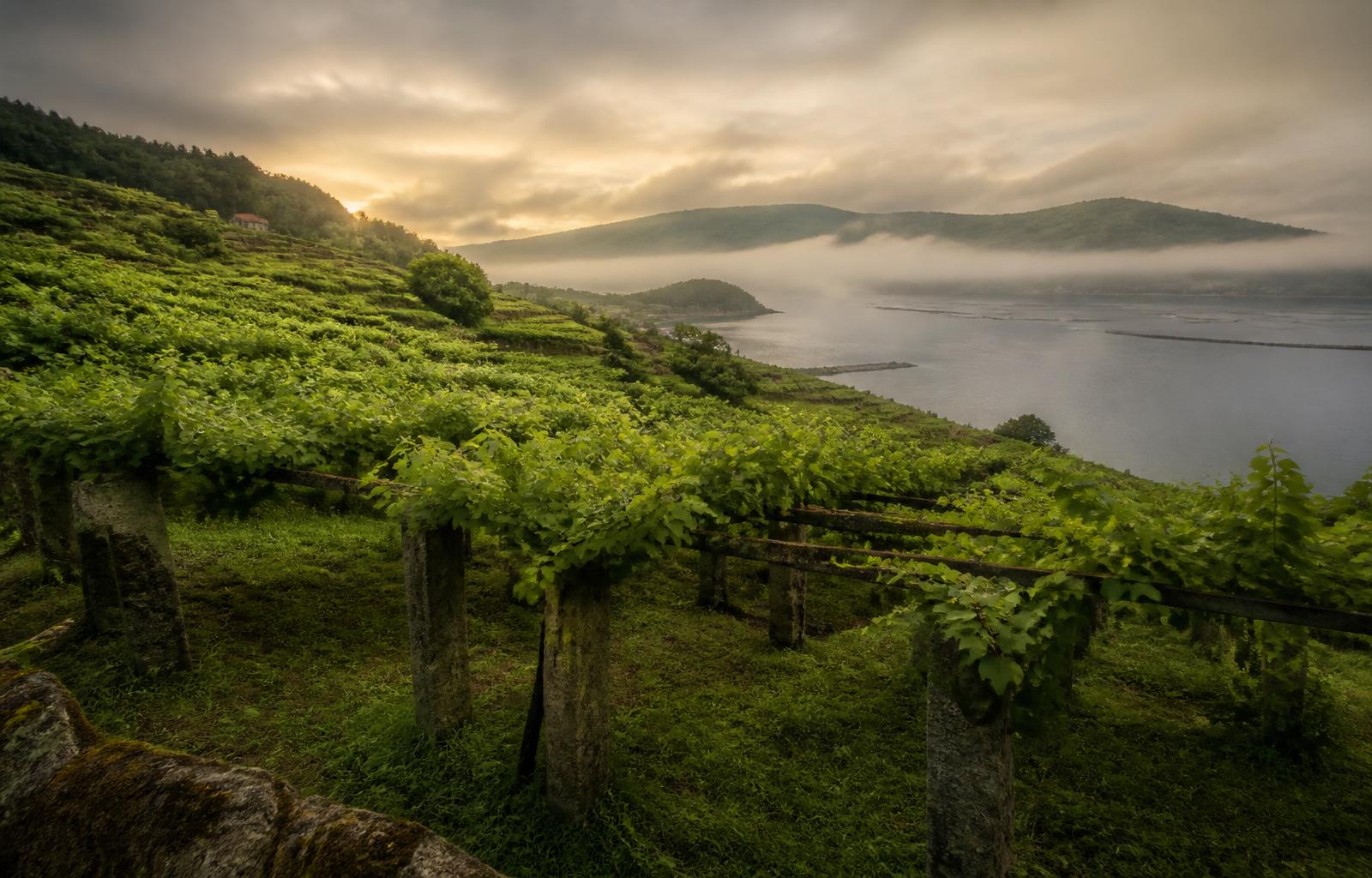
Misty green Albariño vineyards trained on granite pergolas above an Atlantic estuary in the Rías Baixas, Galicia, at golden hour
Spain Wine Guide

Spain · Wine Route

Galicia Wine Escape: Rías Baixas & Albariño

A solo-friendly guide to Albariño, granite soils, Galician seafood, historic pazos, and the misty magic of Green Spain.

  • Solo-Friendly
  • Coastal Wine
  • Albariño
  • Seafood

When you picture Spanish wine country, you likely imagine the sun-baked, dusty plains of Rioja or the steep, arid terraces of Priorat. Galicia is nothing like that. Located in the far northwest corner of the Iberian Peninsula, sitting directly above Portugal, Galicia is 'Green Spain' — a land defined by the Atlantic Ocean. It is misty, lush, and lashed by maritime winds, its coastline fractured into deep, fjord-like estuaries called rías.

From this dramatic, rain-swept landscape comes one of the greatest white wines in the world: Albariño. For the solo traveller, Galicia offers a deeply atmospheric, almost Celtic escape. You can spend the morning walking the final steps of the Camino de Santiago, the afternoon tasting wine under a granite pergola in a 16th-century manor house, and the evening eating octopus pulled straight from the sea.

This is my guide to the Rías Baixas — the estates, the coastal villages, and the seafood that makes this region unforgettable.

Base

Santiago de Compostela — with Cambados and the Val do Salnés coast a 45-minute drive south

Getting around

Fly or take the fast train to Santiago; hire a car for the Rías Baixas vineyards, or base yourself in coastal Cambados

When to go

Late spring and September for warm, drier weather and harvest energy on the coast

Best for

Solo wine travel, Albariño, Galician seafood & historic pazos

Take It With You

Save this route as a PDF

Open a clean, print-ready version of this Galicia wine escape — save it as a PDF or print it for the trip. Every base, pazo and seafood table travels with it.

Before You Go

Understanding Albariño & the Terroir

Albariño is the undisputed king of Galician wine, making up over 90% of plantings in the Rías Baixas DO. It is the perfect storm of grape and geography: the soils are almost entirely decomposed granite, giving the wine a striking, electric minerality, and the wet, humid climate means vines are trained high on granite posts (the parra pergola system) so Atlantic breezes blow underneath and keep the grapes healthy. The region splits into five sub-zones — here are the ones worth knowing.

Sub-ZoneCharacterKey GrapesWhat to Expect
Val do SalnésThe original, coolest and most coastal sub-zone, around CambadosAlbariñoCrisp, saline, mineral — the classic 'taste of the sea' Albariño
Condado do TeaInland along the Miño river, warmer and more shelteredAlbariño, TreixaduraRicher, rounder, peach-scented and a touch fuller-bodied
O RosalCoastal terraces on the Portuguese borderAlbariño, Loureira, CaíñoFloral, citrussy blends with bright Atlantic acidity
Rías Baixas DOOver 90% Albariño, trained high on granite pergolas (parras)AlbariñoWhite peach, lemon zest, white flowers — razor-sharp and salty

Nicole's Angle: A great Rías Baixas Albariño literally tastes like the sea — order it with grilled razor clams and let the salinity meet the brine.

Getting Around

Basing Yourself in Santiago de Compostela

You can fly directly into Santiago de Compostela, or take the fast train (AVE/Alvia) from Madrid, which takes just over three hours. Santiago is the perfect base — a stunning, historic city with a brilliant dining scene, built entirely of golden granite that glistens in the frequent Galician rain.

From Santiago, the Rías Baixas vineyards are about a 45-minute drive south toward the coast, so you will want to hire a car to explore the estates and coastal villages. Alternatively, base yourself right in the vineyards in the elegant seaside village of Cambados, the unofficial capital of the Val do Salnés.

Nicole's Tip: In Galicia, historic manor houses are called pazos — and many of the greatest wineries are housed in these centuries-old stone estates surrounded by gardens and vines. Book your tours in advance, as the most enchanting pazos keep small, intimate visiting hours.

The Guide

The Heart of the Rías Baixas

The Base

Santiago de Compostela: The Historic Anchor

Santiago is famous as the final destination of the Camino de Santiago pilgrimage route, but you do not need to walk 800 kilometres to appreciate its magic. The old town is a UNESCO World Heritage site, built entirely of golden granite. For a solo traveller it is the ideal base — easy to walk, full of life, and home to one of the greatest food markets in Spain.

What to Do

  1. Mercado de Abastos

    The second most visited site in the city after the Cathedral. Open Monday to Saturday mornings, the seafood halls are staggering — razor clams, spider crabs, goose barnacles and massive octopuses. The best place to understand Galician food culture solo: wander the stalls, buy local Tetilla cheese, Padrón peppers and a slice of empanada, and eat standing up.

Where to Eat & Drink Well

  1. A Tafona

    Rúa da Virxe da Cerca 7, Santiago de Compostela

    If you want to splurge, book a table at this Michelin-starred restaurant run by Chef Lucía Freitas. It is a brilliant, modern interpretation of Galician seafood and market produce, served in a beautiful, skylit stone dining room.

    Nicole's Tip: Solo diners are welcomed warmly — ask for the tasting menu with a wine pairing to taste a sweep of small, growers' Albariños.

Where to stay: Stay inside the granite old town within walking distance of the Cathedral and the Mercado de Abastos — it keeps the food market, the pulperías and the late dinners all on foot, with no car needed for your city days.

The Estates

Cambados & Val do Salnés: The Coastal Vineyards

The Rías Baixas is divided into five sub-zones, but the most famous, historic and coastal is the Val do Salnés. Its unofficial capital is the elegant seaside village of Cambados. Here the vines are trained high off the ground on granite posts using the pergola system (parras), letting the Atlantic breezes blow underneath to keep the grapes healthy — and giving the wine its striking, electric minerality.

Where to Eat & Drink Well

  1. Pazo de Señorans

    Vilanoviña, Meis

    One of the most enchanting estates in Spain. Housed in a beautifully restored 14th-century pazo, it is widely considered one of the absolute benchmark producers of Albariño, with wines known for their incredible ability to age. Book a guided tour to walk beneath the ancient parras and taste their Selección de Añada.

    Nicole's Tip: Their late-release Selección de Añada is the wine that proves Albariño can age for a decade or more — don't leave without tasting it.

  2. Do Ferreiro

    Meaño

    A small, deeply respected family winery in the heart of the Salnés Valley. The Méndez family farms over 175 tiny parcels of Albariño by hand. Their Cepas Vellas (Old Vines) bottling comes from a single vineyard planted in 1785 — some of the oldest vines in the world. The tasting experience is intimate and profound.

  3. Bodegas Martín Códax

    Burgáns 91, Cambados

    Named after a 13th-century Galician troubadour, this is one of the larger and most famous cooperatives in the region, sitting on a hill overlooking the Ría de Arousa estuary. The terrace view is spectacular, and it is a brilliant place to taste the different expressions of Albariño side-by-side.

  4. Adega Condes de Albarei

    Castrelo, Cambados

    Founded in 1988 by a group of enthusiastic local vine growers, this estate produces vibrant, classic Salnés Valley Albariño. The winery tour is excellent, offering a great overview of how the local growers collaborate to maintain the quality of the region.

Where to stay: Parador de Cambados, housed in a spectacular 17th-century ancestral mansion right on the Cambados waterfront, is the place to wake up in the wine region. It offers classic Spanish luxury, a brilliant courtyard and an excellent restaurant — safe, elegant, and the perfect solo retreat.

The Plan

A Suggested Route: Three Days in Galicia

Day 1

Santiago de Compostela

Arrive by train or flight and settle into the golden granite old town. Spend the morning in the Mercado de Abastos — Tetilla cheese, Padrón peppers, a slice of empanada eaten standing up — then a plate of pulpo á feira in a pulpería. Splurge on dinner at A Tafona if you want a Michelin night.

Day 2

Santiago → Val do Salnés

Hire a car and drive 45 minutes south to the coast. Morning tour beneath the ancient parras at Pazo de Señorans, then on to the intimate old vines of Do Ferreiro. Lunch on grilled razor clams with a glass of Albariño, and finish on the estuary-view terrace at Martín Códax.

Day 3

Cambados

Base yourself in seaside Cambados. Wander the waterfront and the Parador's courtyard, taste classic Salnés Albariño at Adega Condes de Albarei, and spend a slow afternoon over steamed mussels and local seafood — drinking the wine exactly where it is grown.

Travel Well

The Solo Sips & Bites Philosophy for Galicia

Drink the wine where it is grown

Albariño makes absolute sense when you are standing on the Galician coast, smelling the salt in the air. Order it with a plate of simple, grilled razor clams (navajas) or steamed mussels — the acidity of the wine cuts perfectly through the briny sweetness of the seafood.

Embrace the rain

Galicia is green because it rains. Do not let a grey day ruin your trip. The mist rolling through the granite pergolas of the vineyards is incredibly atmospheric. Pack a good trench coat, sit in a cosy pulpería, and order a glass of wine.

Explore the market

The Mercado de Abastos in Santiago is the best place to understand Galician food culture solo. You don't need a formal reservation — just wander the stalls, buy some local cheese, Padrón peppers and a slice of empanada, and eat standing up.

Galicia is the wild, poetic edge of Spain. The wine here doesn't taste like the sun; it tastes like the ocean, the granite, and the wind. Saúde!

Save This

Quick Reference

VenueLocationBest ForSolo-Friendly
Mercado de AbastosSantiagoThe ultimate Galician seafood & produce market✓ Excellent
A TafonaSantiagoMichelin-starred modern Galician dining✓ Book ahead
Pazo de SeñoransMeis14th-century manor house & age-worthy Albariño✓ Book ahead
Do FerreiroMeañoIntimate family estate & 200-year-old vines✓ Book ahead
Bodegas Martín CódaxCambadosSweeping estuary views & tasting flights✓ Excellent
Adega Condes de AlbareiCambadosClassic, vibrant Albariño & grower history✓ Excellent
Parador de CambadosCambadosA 17th-century mansion in the Albariño capital✓ Excellent

Good to Know

Frequently asked questions

What wine is Galicia known for?

+

Galicia's Rías Baixas region is famous for Albariño, a crisp, aromatic white that makes up over 90% of the plantings. Grown on decomposed-granite soils and cooled by Atlantic breezes, it smells of white peach, lemon zest and white flowers, with a razor-sharp, mouth-watering salinity that literally tastes of the sea.

What is the best base for a Rías Baixas wine trip?

+

Santiago de Compostela is the ideal base — a stunning UNESCO old town with a brilliant dining scene, reachable by direct flight or a three-hour fast train from Madrid. The Rías Baixas vineyards are about a 45-minute drive south, so hire a car, or base yourself right in the coastal village of Cambados in the heart of the Val do Salnés.

What is a pazo?

+

In Galicia, historic manor houses are called pazos — centuries-old stone estates surrounded by gardens and vines. Many of the greatest Albariño wineries, such as the 14th-century Pazo de Señorans, are housed in these beautiful manor houses, and the 17th-century Parador de Cambados lets you sleep in one on the waterfront.

When is the best time to visit Galicia for wine?

+

Late spring and September are ideal — warmer, drier weather and harvest energy on the coast. But Galicia is 'Green Spain' for a reason: it rains often, and the mist rolling through the granite pergolas is part of the atmosphere. Pack a good trench coat and embrace the grey days in a cosy pulpería.

What food should I eat in Galicia?

+

Start with pulpo á feira — octopus boiled in copper pots, snipped onto a wooden plate and drenched in olive oil, sea salt and smoked paprika. Pair Albariño with grilled razor clams (navajas) or steamed mussels, and graze the Mercado de Abastos in Santiago for Tetilla cheese, Padrón peppers and empanada.

Travel Well

More wine weekends, sent slowly

New solo-friendly itineraries, beautiful tables, and downloadable guides — only when there's something genuinely worth sharing.